~/projects/vispa⎇ main✓❯cat case-study.md
VISPA: AI Sign Language Learning Platform
Full-stack web app for learning sign language, with a real-time random-forest hand-gesture detector under the hood. I owned the UI/UX in Figma and walked the design through implementation.
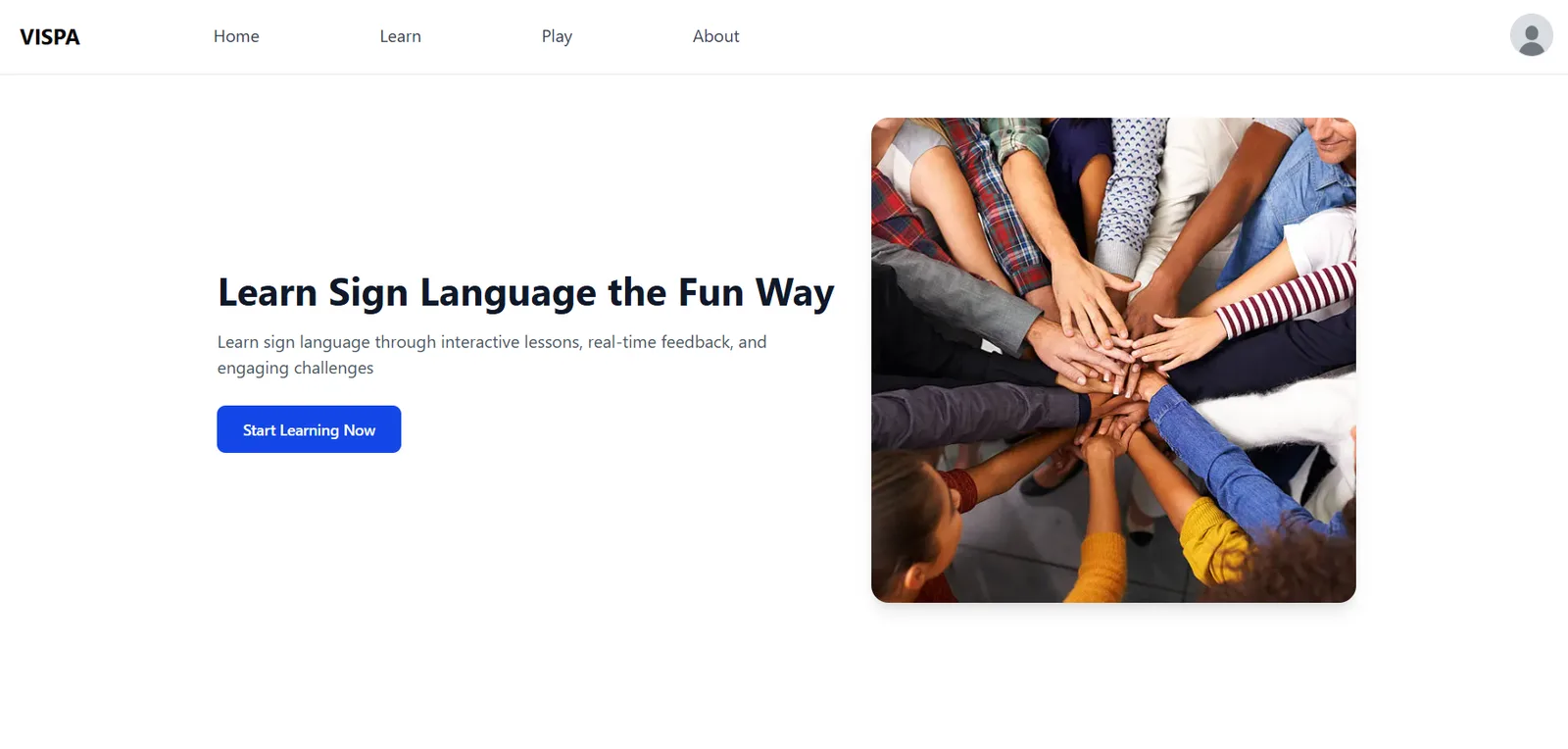
- UI/UX Designer
- Feb – Jun 2025
- shipped
Context
Class project, team of 5. Most digital tools for learning sign language are passive: video libraries, dictionaries, lookup interfaces. We wanted to take the structure of language-learning apps (graded curriculum, feedback loops, gamification) and apply it to sign language, with a real gesture detector instead of a video-watching loop.
What I built
- Led the UI/UX design in Figma: full design system, user flows, and interactive prototypes for the home, learn, and play sections.
- Built design decisions on top of upfront user research rather than assumption.
- Worked alongside the dev team through implementation, watching a Figma design become a real component tree in Next.js and seeing how that surface integrates with a Flask + Supabase backend.
The recognition layer is a Random Forest classifier trained on hand-landmark features; it works on real letters in real time, not just demoware.
Stack
Figma · Next.js · React · Flask · Python · Random Forest · Supabase · Vercel
Outcome
Shipped as a class project. It never went to real users, but the gesture detector classifies handsign letters reliably in live use. The final product follows the user-centric design principles set in prototype.
~/projects/vispa⎇ main✓❯cat links.md